Author: Jonas Porombka

  • Fragments

    Fragments

    GenreElectronica
    Published2026
    Track count4
    Duration21:07

    First EP featuring electronic music, released in 2026. Alongside my work in the field of sound, I have a strong interest in various forms of synthesis. For this release, I primarily worked with analog synthesizers and used field recordings to give the tracks an organic feel.

  • Plant Choir

    Plant Choir

    LocationHarz, Germany
    Coordinates51.800896, 10.569550
    Recorded2023
    FormatStereo
    Duration03:10

    This piece is an experiment for which I used an unwanted noise that I captured during a field recording trip in the Harz Mountains. A steam locomotive regularly passes over the “Brocken,” often emitting its characteristic tonal horn sound. In a natural soundscape, this wasn’t what I had been looking for and normally I would have deleted this sound. That gave me the idea to recycle the audio and transform the sound of the horn into a short composition using effect chains and plant sonification.

    To achieve this, I mainly used granular synthesis and after some tweaking, the horn sound transformed into something that sounded like a choir. The arrangement and notation of the piece were played by a houseplant. I connected it with sensors that convert the plant’s internal electrical and biological processes into midi notes. This has resulted in a “nature audio recycling”: a signal that is actually unusable has become the basis for something beautiful, performed by nature itself.

  • Lingering Echoes

    Lingering Echoes

    LocationsHarz Mountains,
    Hainich National Park
    Coordinates51.720688, 10.406100
    51.079506, 10.379758
    Recorded2022
    FormatStereo
    Duration10:39

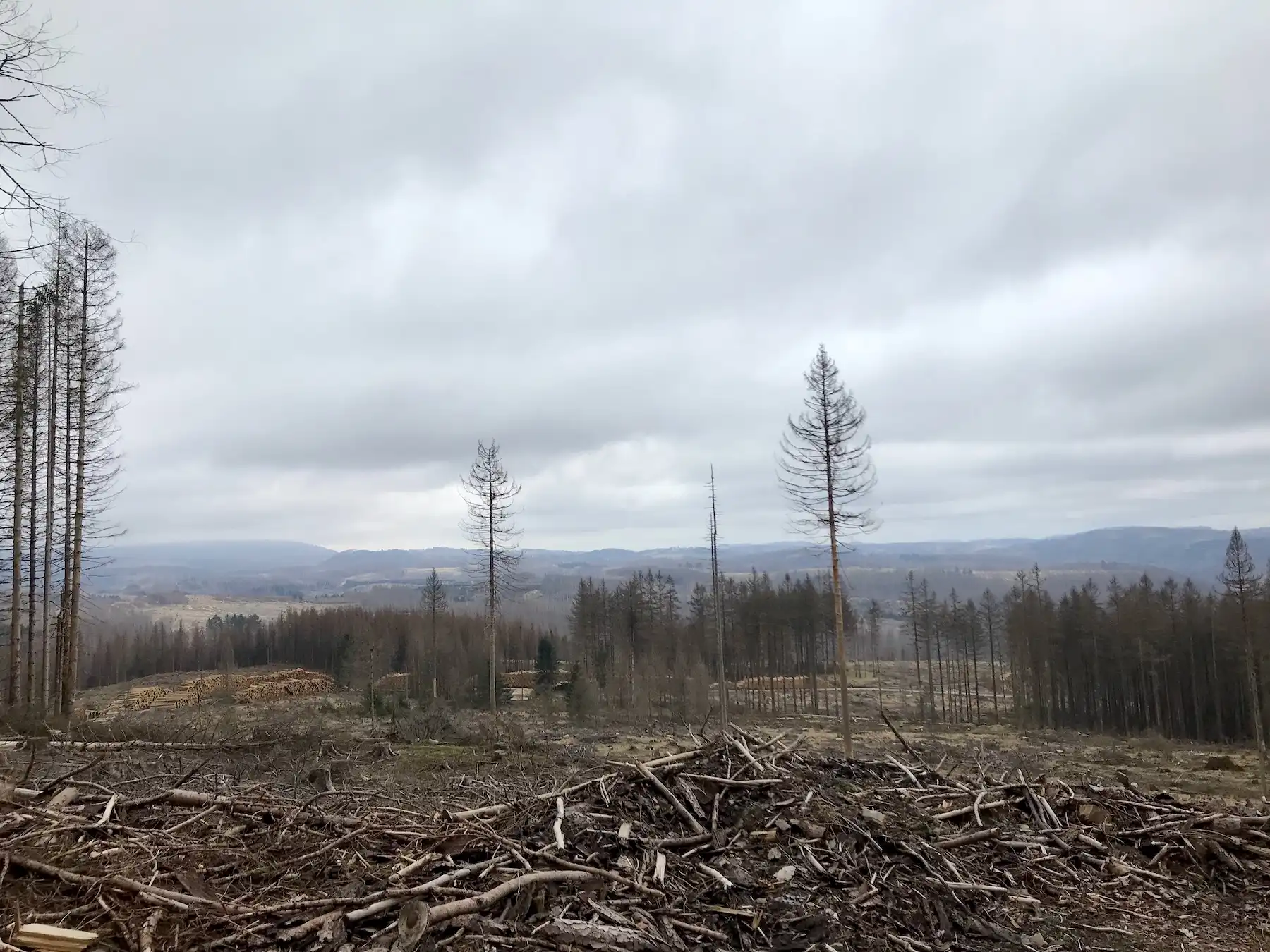
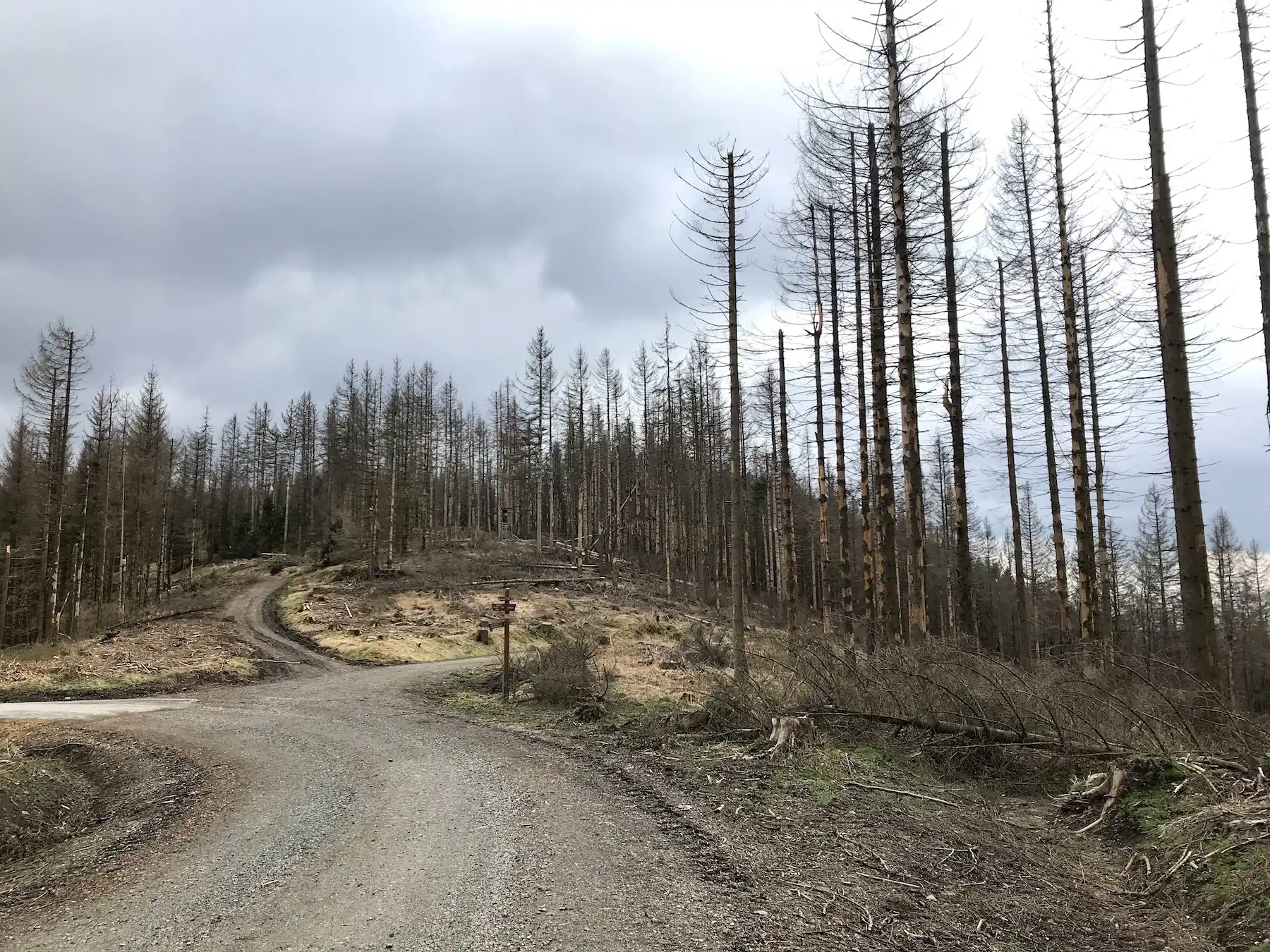
    How is the sound of forests transforming in the face of increasing human interference with nature? To make this conflict tangible, I traveled to forests that have been affected by climate change to varying degrees and captured field recordings in the Harz Mountains and Hainich National Park.

    The impacts of climate change are particularly evident in the Harz Mountains. At elevations of a few hundred meters above sea level, the local spruce stands have been severely decimated or have already disappeared entirely. As a result, only a few bird calls can be heard there, and depending on the weather, the sounds of the wind and passing airplanes dominate. Especially in the Hainich National Park with its old beech forests, a variety of bird calls are present alongside the babbling of flowing water.

    I used the recordings to contrast the sound of intact forests with that of destroyed ones and employed alienated anthropophonic noises as disruptive elements responsible for this sonic transformation. During the project, I became aware once again of the profound impact human activity has on nature. With the loss of biodiversity, rising temperatures and extreme weather events, our soundscapes are undergoing fundamental change. What remains is an echo of bioacoustic primordiality.

  • Urban Transitions

    Urban Transitions

    LocationBochum, Germany
    Coordinates51.480386, 7.216152
    Recorded2021
    FormatStereo
    Duration23:19

    Cities never fall silent. Engines, ventilation, construction sites and signal tones create a constant layer of sound that most of us have long stopped noticing. Yet after air pollution, noise is considered the second-largest environmental health burden in Western industrialized countries.

    Urban Transitions is an artistic interpretation of the acoustic environments of Bochum. It explores how our everyday soundscape is shaped and the impact it has on us. Its conceptual foundation is a “soundride”, inspired by R. Murray Schafer’s concept of the “soundwalk”: I fitted a bicycle with microphones and rode from the city centre past the main station and construction sites, through forests and farmland to the Ruhr river. The recordings of this ride form the narrative thread and all additional field recordings originate from the Bochum area.

    Rather than reproducing the city neutrally, the piece condenses and accentuates its noise. Traffic swells into a crescendo, the pounding of a pile driver marks the ongoing structural change of the Ruhr area, and chainsaws cut into the forest until the birds fall silent. Against this stand moments in which human sound disappears entirely and nature can unfold, making audible how rare such places have become in and around the city.

    The coronavirus pandemic is part of the work as well. Three abrupt interruptions reflect the three lockdowns in Germany. The silence consists of recordings of Bochum’s empty city centre during the curfews: a brief insight of how the city sounds when it stops, and a pause in a society otherwise driven by technology and the pressure to perform.

    Urban Transitions invites listeners to pay closer attention to the sounds around them and to understand sound not only as a disturbance to be reduced, but as a quality of our cities that can be shaped.