| Locations | Harz Mountains, Hainich National Park |
| Coordinates | 51.720688, 10.406100 51.079506, 10.379758 |
| Recorded | 2022 |
| Format | Stereo |
| Duration | 10:39 |
How is the sound of forests transforming in the face of increasing human interference with nature? To make this conflict tangible, I traveled to forests that have been affected by climate change to varying degrees and captured field recordings in the Harz Mountains and Hainich National Park.
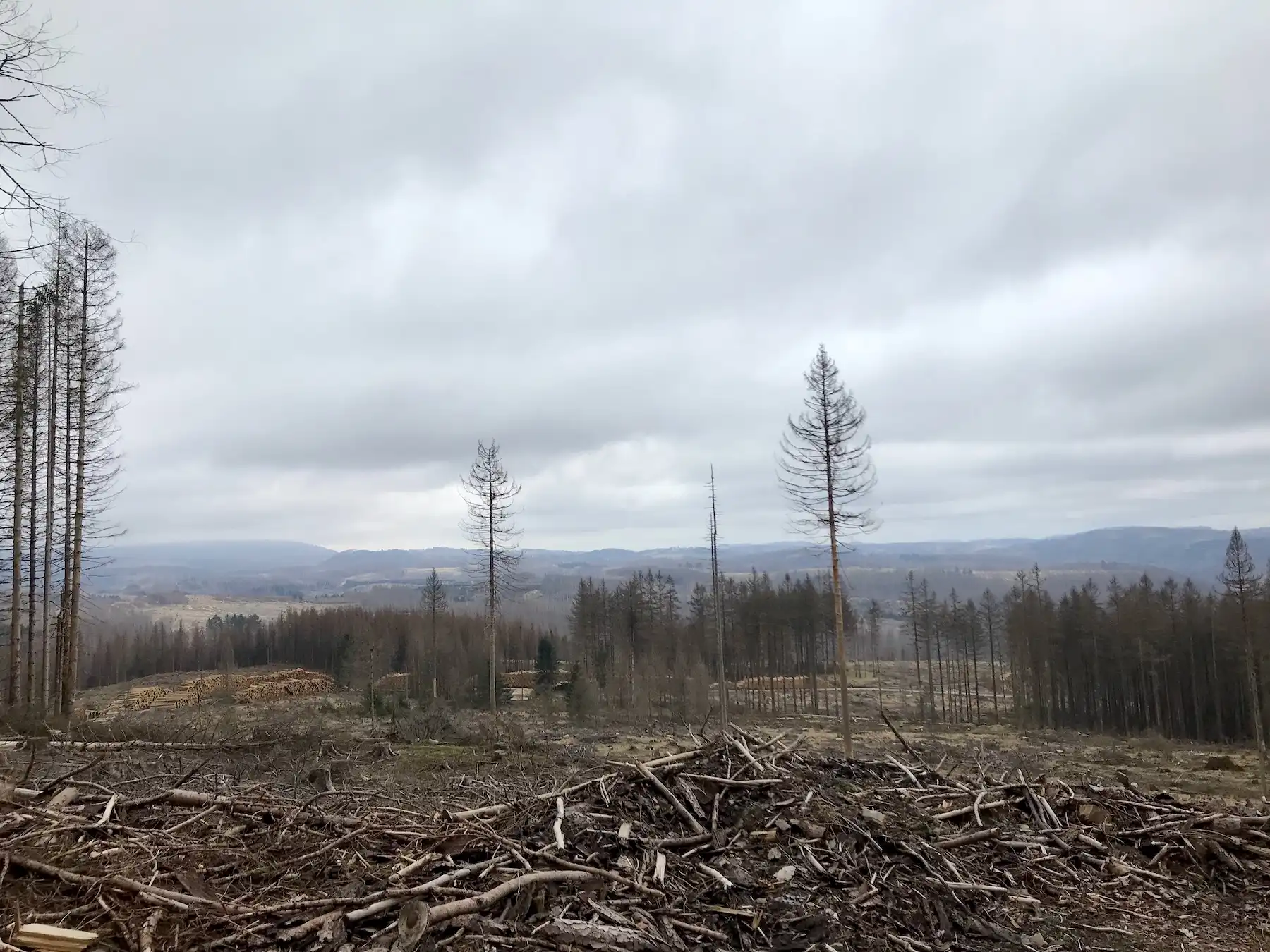
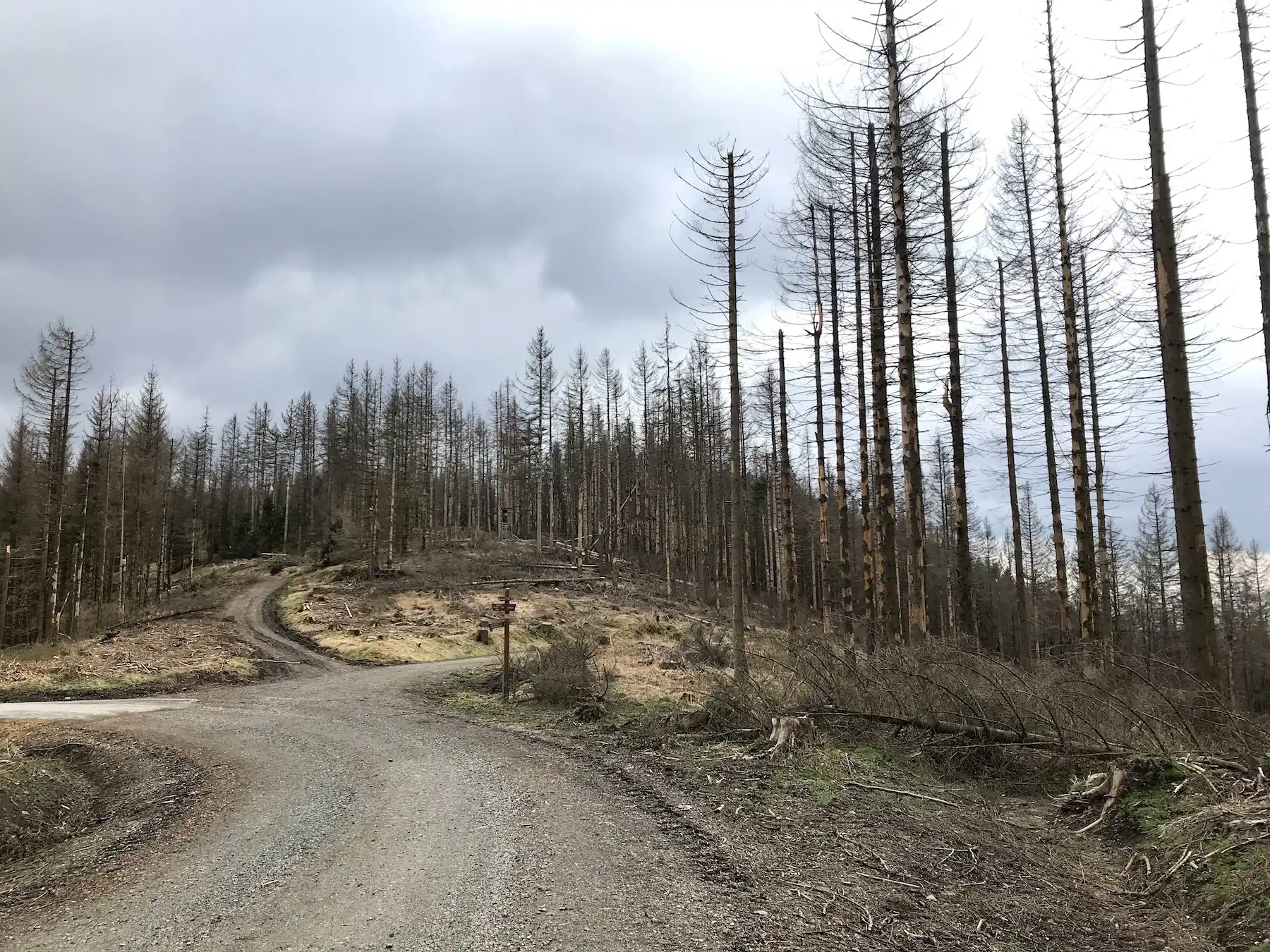
The impacts of climate change are particularly evident in the Harz Mountains. At elevations of a few hundred meters above sea level, the local spruce stands have been severely decimated or have already disappeared entirely. As a result, only a few bird calls can be heard there, and depending on the weather, the sounds of the wind and passing airplanes dominate. Especially in the Hainich National Park with its old beech forests, a variety of bird calls are present alongside the babbling of flowing water.
I used the recordings to contrast the sound of intact forests with that of destroyed ones and employed alienated anthropophonic noises as disruptive elements responsible for this sonic transformation. During the project, I became aware once again of the profound impact human activity has on nature. With the loss of biodiversity, rising temperatures and extreme weather events, our soundscapes are undergoing fundamental change. What remains is an echo of bioacoustic primordiality.